Stargate: The Movie Games
The movie, in 16-bit
When the 1994 film came out, several action games cashed in on it on the consoles of the day: a Game Boy version closer to a puzzle game, then Mega Drive and Super Nintendo versions in an action-platformer style. You replay the Abydos mission against Ra.
Year
1994 to 1995
Genre
Action / platformer
Studio
Probe · Acclaim
Platforms
Game Boy, Mega Drive, Super Nintendo, Game Gear
Overview: two games born from a cult film
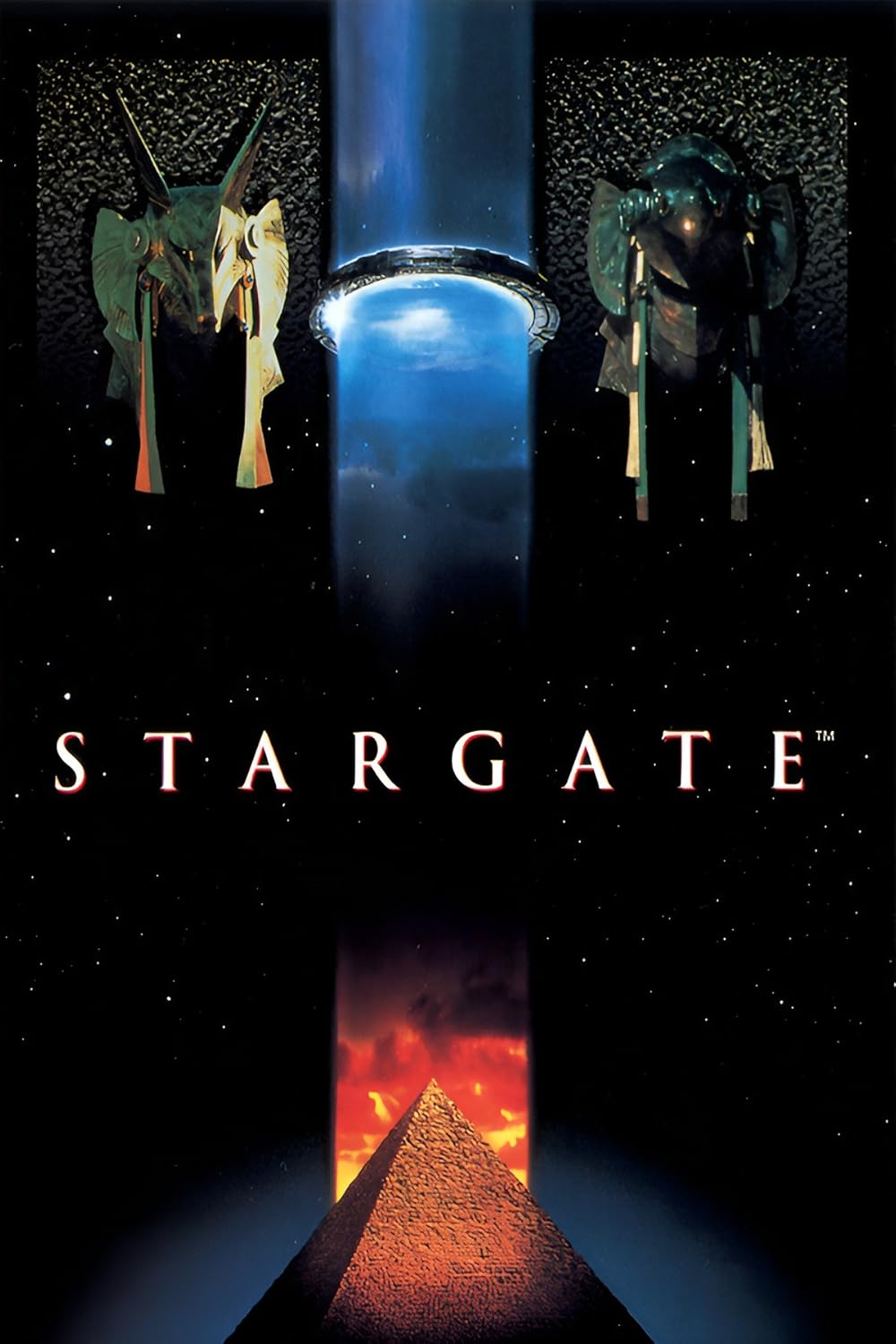
When Stargate hit theaters in October 1994, Roland Emmerich and Dean Devlin's film instantly became a phenomenon, long before the TV series took over. And like every big license of the era, the film got its video game adaptations. Acclaim Entertainment picked up the rights and handed the work to British studio Probe (Probe Software / Probe Entertainment), a company that ran on movie adaptations and ports at the time. That partnership actually produced two very different games, with almost nothing in common except the logo on the box.
The first is a puzzle game for the Nintendo Game Boy released in 1994, later ported to the Sega Game Gear in 1995. The second is an action platformer released in 1995 on the Super Nintendo and the Mega Drive (Genesis in the United States). Two genres, two audiences, one ambition: to ride the film's wave while it was still high. It's a textbook case of '90s video game marketing, when a single brand was spun into as many cartridges as possible.
The Game Boy puzzle game (1994): the Stargate as a brainteaser
So the very first Stargate game is a puzzle game, and the idea is rather clever. Developed by Probe and published by Acclaim, it turns the Stargate itself into the playing field. The concept recalls Tetris and the matching games of the time: tiles marked with symbols fall into the Stargate, and you have to stack three identical symbols to clear them. If the mistakes pile up, the stacks rise, and when they reach the top of the Stargate, it's game over.
Where the game gets thematic is the gate address shown on screen, made up of seven symbols, just like in the film, where you have to dial an address to open a passage. Each time you clear three copies of a symbol in that address, it counts toward completing it. The game has two modes. In Skill mode, you dial as many addresses as you can while the speed climbs, in the grand tradition of endless high scores. In Battle mode, everything you clear goes through the Stargate and lands on your opponent's side, giving it a bit of a competitive Tetris feel. It's simple, fast-paced, and clearly the quietest member of the family.
The console action game (1995): the real heavyweight
The Stargate game most players remember is the 1995 one on Super Nintendo and Mega Drive. Here, the tone changes completely: the puzzle gives way to a side-scrolling action platformer in which you play Colonel Jack O'Neill out in the sands of Abydos. An interesting development detail: the two versions weren't made by the same team. The Mega Drive version was developed by Probe Entertainment, while the Super Nintendo version went to Tantalus (Tantalus Interactive), with Acclaim publishing both. The soundtrack is credited to Steve Collett and Andy Brock. The release was spread over spring 1995, with the SNES version in April in North America and the Mega Drive version right after in May, followed by the European and Japanese launches in the following weeks.
Controller in hand, O'Neill walks, runs, jumps, climbs and shoots. His main weapon is a machine gun with unlimited ammo that can be upgraded with power-ups: rapid fire, spread fire, extra power, and even a cooling system for the gun. He also carries grenades, up to 99 regular ones plus alien grenades saved for big trouble. The game breaks up the pace with two flight sequences where you take on Ra's gliders in aerial combat. Among the memorable fights are three boss battles: Anubis, whom you face twice, and then Ra himself at the end of the road.
The story and its ties to the film
The 1995 game's story faithfully follows the spirit of the film without copying it shot for shot. O'Neill has to find the scattered members of his team, recover lost supplies, and above all retrieve the famous nuclear bomb brought by the mission, here broken into seven pieces to collect across the levels. At the same time, you have to gather seven Egyptian hieroglyphs, a direct echo of the seven symbols needed to operate the Stargate. Victory only comes once both collections are complete: the bomb and the glyphs.
Along the way, you find the broad strokes of the film: freeing the people of Abydos, backing the rebellion against the tyrant Ra, battling his right-hand man Anubis, and the final duel against Ra before fleeing his exploding ship. It's a playable digest of the film's plot, with the approach typical of adaptations of the era, padding out the number of items to collect to stretch playtime. A tasty detail for fans of the saga: the game already spells the hero's name O'Neill with two L's, the spelling that would become a running gag on the TV series, where Jack insists there are two L's, because O'Neil with one L has no sense of humor.
Reception: the graphics charm, the controls sink everything
On release, the 1995 action game drew very mixed reviews, and the verdict leans clearly toward disappointment. The famous Electronic Gaming Monthly, with its four reviewers, gave the Mega Drive version an average of about 3.9 out of 10. The complaint comes up almost everywhere: the controls. EGM summed it up bluntly, explaining that even simple moves, like jumping from one platform to another or shooting diagonally downward, take serious effort. In other words, the game fights its own player.
Yet not everything is bad, and that's what makes the case frustrating. GamePro praised varied, graphically impressive backgrounds while pointing out confusing controls, and noted that the Super Nintendo version was nearly identical to the Mega Drive one, with a slightly less confusing control setup. Next Generation liked the solid level design and especially the lovely character animation, but found the gameplay unoriginal and not very faithful to the source. Scores varied by outlet, from a harsh 52 out of 100 in Game Players to a kinder 78 out of 100 in Sega Power, with a 3 out of 5 from Next Generation. The overall picture is of a pretty but rough game that had what it took to please and sabotaged itself at the controls.
Legacy: what remains, and what never came
In hindsight, these 1994 and 1995 games hold a special place: they're Stargate's very first steps into video games, at a time when only the film existed, without a single minute of TV. They remain collectors' curiosities, regularly dug up in retrospectives on '90s movie tie-ins, that somewhat cursed genre that produced as many flops as gems. The Game Boy puzzle game in particular keeps a bit of goodwill for its idea of turning the gate address into a game mechanic.
What stands out most is the great void that followed. While Stargate SG-1 would go on to become a monument of televised science fiction for ten seasons, video games went through a long string of failures. The most painful project was Stargate SG-1: The Alliance, a shooter developed by Perception, set for Xbox, PlayStation 2 and PC with the show's four heroes playable in a story set after season eight. The partnership between Perception and publisher JoWooD blew up in August 2005 over payment disputes and missed deadlines, and the game was buried for good in early 2006. Then came the ambitious MMO Stargate Worlds, led by Cheyenne Mountain Entertainment with MGM, which entered closed beta in 2008 but was caught up in financial trouble, until the studio's bankruptcy and the project's abandonment. Stargate's video game curse has deep roots, and it starts right after these 1995 cartridges.
Trivia and little stories
First fun fact: the two first-wave Stargate games share the same name, the same license and the same publisher, but belong to completely opposite genres. A player who bought the Game Boy puzzle game in 1994 and then the Super Nintendo action game in 1995 expecting the same experience would have been in for a shock. It's the kind of confusion typical of the movie tie-in era, when the brand mattered more than the content.
A second detail purists enjoy: how the work was split between studios. On consoles, Probe handled the Mega Drive while Tantalus took the Super Nintendo, a common division of labor at a time when porting a game from one machine to another was almost a complete rewrite, so different were the 16-bit architectures. Finally, for the record, these games feature a Colonel O'Neill who has nothing to do with the face of the series: in the film, the character was played by Kurt Russell, and it was only later, with SG-1, that Richard Dean Anderson gave him his legendary deadpan tone. The pixelated heroes of 1995 are the forgotten cousins of a family that was about to become huge.
Stargate Initiative's take
Our take at Stargate Initiative: these games are worth it mostly for what they represent, the first stammering steps of our saga before the series even existed. The Game Boy puzzle game is an endearing curiosity, genuinely well thought out with its gate address to dial, but the 1995 action game is the perfect symbol of 16-bit waste: beautiful backgrounds and superb animation ruined by controls that make you curse at every jump. We don't recommend it for the fun of playing; we recommend it as a museum piece, the first time our universe tried its luck controller in hand, and the first chapter of a long and cruel video game curse. For fans who want to know everything about Stargate, right down to its dustiest corners.